Turkey sets $500 billion energy plan without a coal-exit date
Turkey wants electricity to replace more fossil-fuel use, but where does coal fit in its new energy plan?
On November 6, Turkey unveiled a $500 billion energy roadmap targeting self-sufficiency by 2040, without setting a timetable to exit coal.
Turkey’s new National Energy Plan seeks to increase electricity’s share of energy use from about 22% to 36% by 2040, while expanding renewable power and pursuing new oil and gas investment. Energy Minister Alparslan Bayraktar said emissions would fall 40%, but defended coal as necessary for supply…
Open original (3 sources):
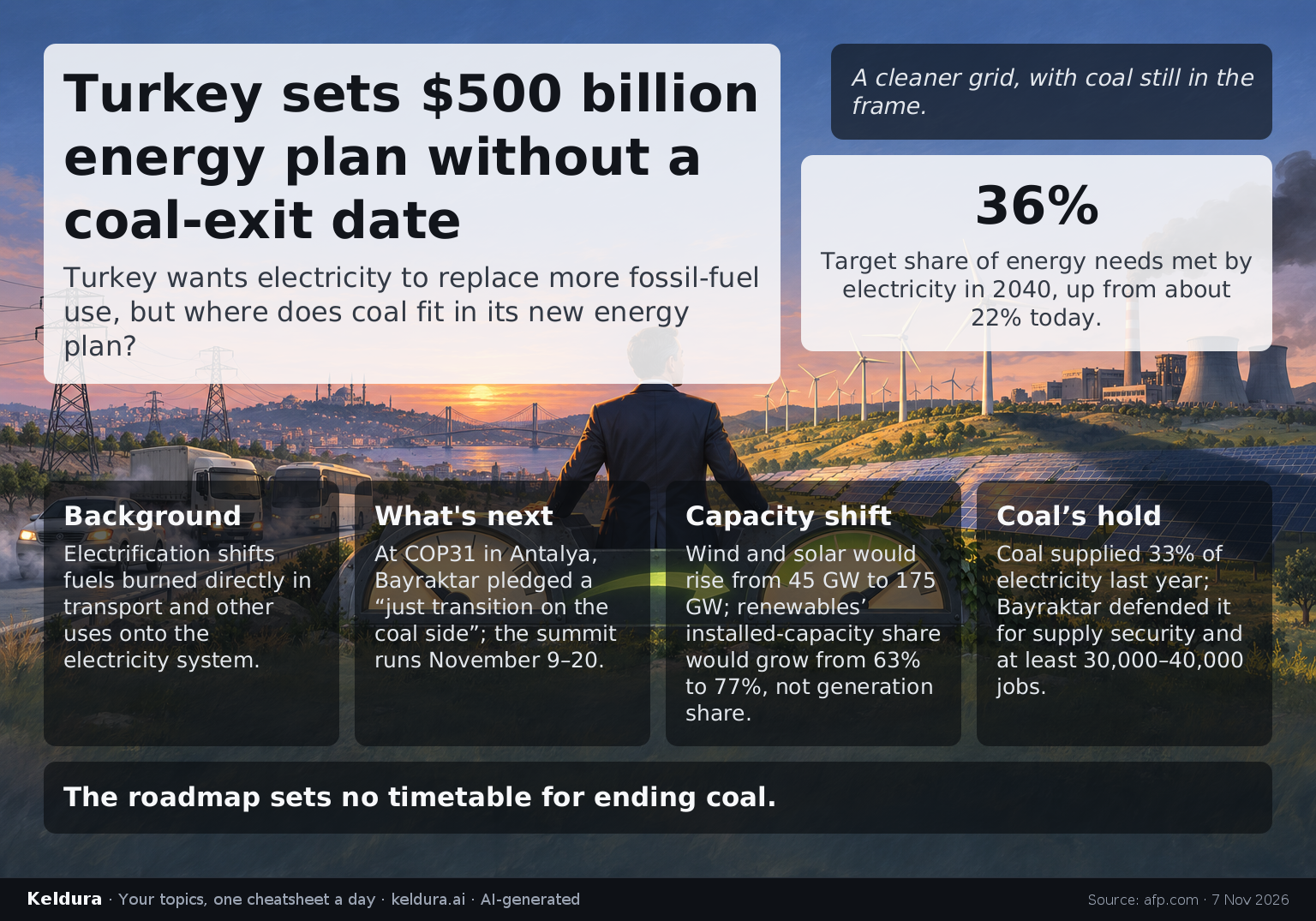
Turkey’s new National Energy Plan seeks to increase electricity’s share of energy use from about 22% to 36% by 2040, while expanding renewable power and pursuing new oil and gas investment. Energy Minister Alparslan Bayraktar said emissions would fall 40%, but defended coal as necessary for supply security and employment. [5] Coal accounted for 33% of Turkey’s electricity generation last year. [11]
Why it matters: The plan would shift more transport and other energy demand onto the electricity system, making the sources of that electricity consequential for emissions. Coal also supports at least 30,000–40,000 jobs, according to Bayraktar, putting workers’ livelihoods alongside supply security in decisions about closing plants. [5]
Key insights: Turkey plans to increase installed electricity capacity from 123 GW in 2025 to 281 GW by 2040—more than doubling the system. [5] | Wind and solar capacity would rise from 45 GW to 175 GW, while renewables’ share of installed capacity would increase from 63% to 77%; those capacity shares are not shares of electricity actually generated. [5] | The roadmap combines renewable expansion with new oil and gas investment, rather than treating energy self-sufficiency as a complete departure from fossil fuels. [5]
Cheatsheet facts: What happened: Turkey unveiled a $500 billion plan targeting energy self-sufficiency and a 40% emissions reduction by 2040. [5] | Why: Bayraktar wants demand to move from diesel and gasoline toward electricity, raising electricity’s share of energy needs from about 22% to 36%. [5] | The catch: Coal supplied 33% of electricity last year, and Bayraktar defended keeping it for supply security and at least 30,000–40,000 jobs. [5][11] | What's next: Bayraktar pledged to outline plans for a “just transition on the coal side” at COP31, which runs November 9–20 in Antalya. [5][14]