French school protests broaden into a national political test
A school-staffing protest has become a wider movement, but will governments address its grievances or prioritize public order?
By October 28, protests begun at a school in Créteil on September 17 had affected more than 1,000 French high schools and expanded into broader political grievances.
A September 17 teachers’ strike over staff shortages at the Antoine de Saint-Exupéry High School in Créteil spread through social-media videos into protests affecting more than 1,000 of France’s approximately 3,700 high schools. The movement broadened to economic, political and social grievances; a…
Open original (2 sources):
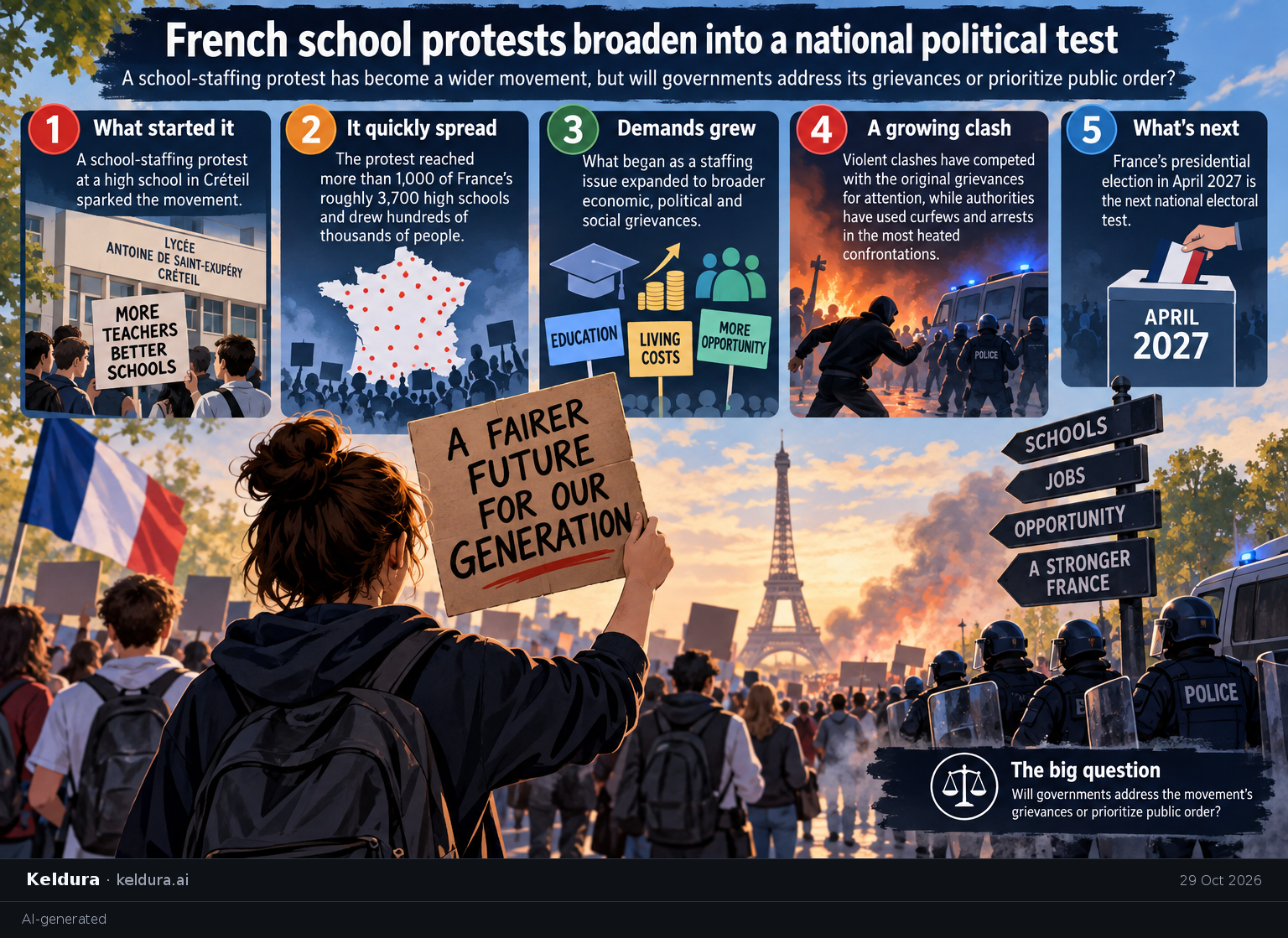
A September 17 teachers’ strike over staff shortages at the Antoine de Saint-Exupéry High School in Créteil spread through social-media videos into protests affecting more than 1,000 of France’s approximately 3,700 high schools. The movement broadened to economic, political and social grievances; after violence on October 17, authorities used crackdowns, curfews and mass arrests where clashes intensified. [13] The French protests sit within a wider European wave in which many young demonstrators cite education, inequality and living costs, although national complaints differ. [4]
Why it matters: France’s April 2027 presidential election gives the response to the protests an electoral dimension: CFR’s analysis says both the far right’s public-order message and the far left’s appeal to younger voters could benefit. Across Europe, governments face the related challenge of distinguishing peaceful demonstrations from rioting without treating varied national movements as one organization. [4][13]
Key insights: The French movement began with a specific staffing dispute before expanding its participants and demands. [13] | An October 7 poll found 55 percent support for the movement, but that measurement preceded the violence reported on October 17. [13] | The BBC describes shared pressures across Europe, not evidence that all the protests are coordinated. [4] | Governments have generally distinguished legally organized peaceful demonstrations from looting and rioting. [4]
Cheatsheet facts: What happened: A Créteil school protest spread to more than 1,000 of France’s roughly 3,700 high schools and drew hundreds of thousands of protesters. [13] | Why: Demands expanded from staffing shortages to wider economic, political and social dissatisfaction. [13] | The catch: Violent clashes have competed with the original grievances for attention, while authorities have used curfews and arrests in the most heated confrontations. [13] | What's next: France’s presidential election in April 2027 is the next dated national electoral test identified in the evidence. [13]
X copy pack
Edition complete
You've reached the end of this edition.